Case study · Restaurant SaaS
Simplifying restaurant management.
A restaurant platform that connects point of sale, inventory, recipes, purchasing and customer loyalty in one ecosystem.
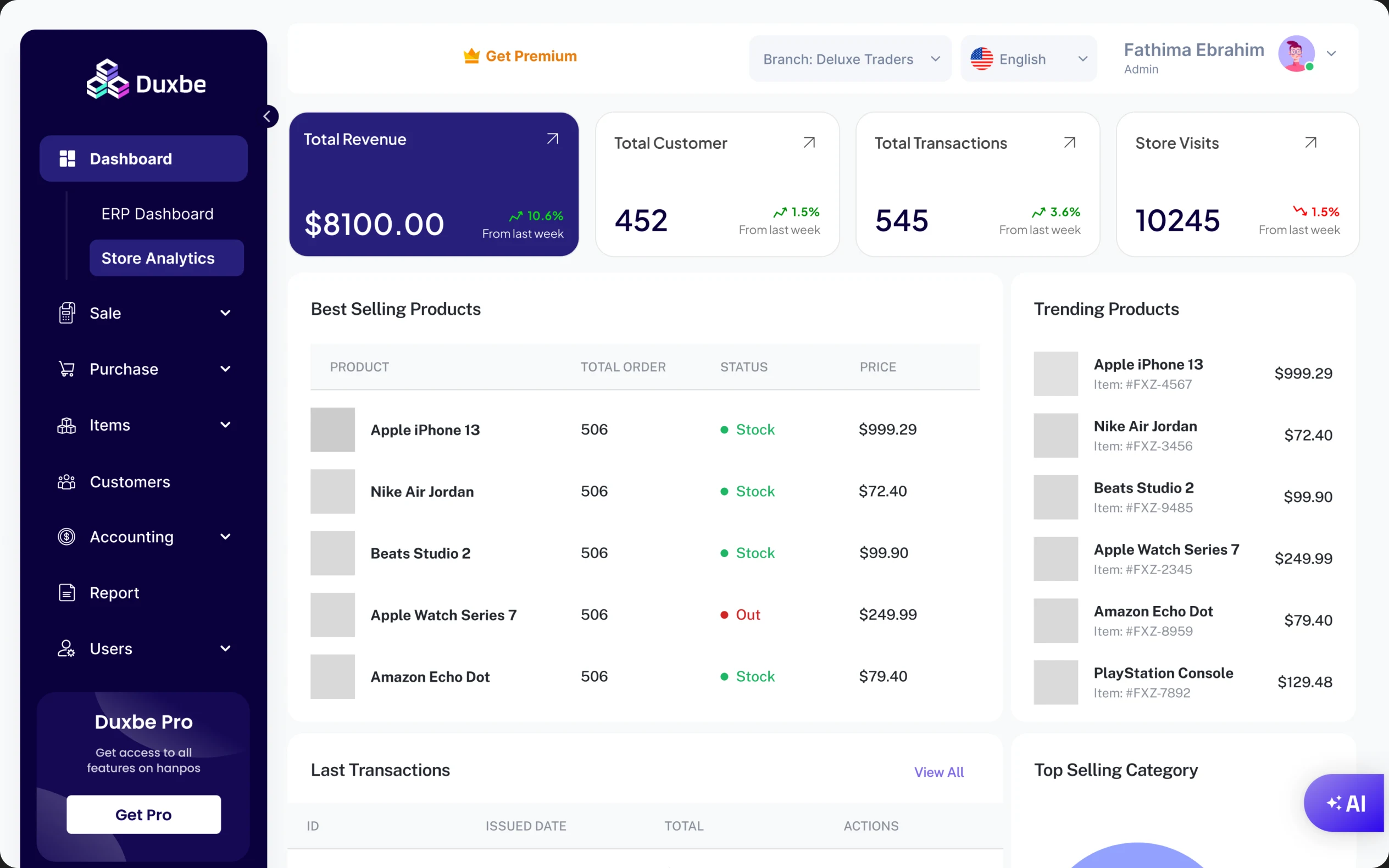
Disclaimer: Due to the confidential nature of the project, all images are representations of the actual work.
01 / Overview
One connected platform for every part of the restaurant.
Duxbe is a restaurant management platform that connects point of sale, inventory, recipe management, purchasing and customer loyalty in one ecosystem.
My goal was to create an intuitive experience that simplifies daily restaurant operations and helps owners make informed business decisions.
02 / The problem
Restaurant teams often manage orders, ingredients, recipes and purchasing across different workflows. Limited visibility and disconnected information make daily operations more complicated.
How might we simplify restaurant management while improving operational efficiency and decision-making?
The challenge
03 / My approach
Three areas of focus.
Simplifying workflows
Making frequent tasks such as order taking, billing and inventory management easier to complete.
Connecting operations
Improving the relationship between menu items, recipes, ingredients and purchasing.
Improving visibility
Helping owners spot important metrics, stock risks and operational issues quickly.
04 / Design process
From workflow to working product.
Five phases, each with a clear output, moving from how restaurants run today to a product the development team could build.
Discover
Understand how restaurant teams take orders, manage stock and buy ingredients today.
- Workflow analysis
Define
Structure the product around the tasks teams repeat every day.
- Information architecture
- User flows
Design
Turn flows into screens, then into reusable patterns.
- Wireframes
- High-fidelity UI
- Design system
Validate
Check the solutions with real users and data before scaling them.
- Prototyping
- Usability testing
- Product analytics
Deliver
Work alongside developers so the design ships as intended.
- Developer collaboration
- Handoff
Dashed: validation through usability testing and product analytics is the planned next step, not completed research.
05 / Outcome
More than an ERP system.
The design direction positions Duxbe as a connected platform for managing restaurant operations, not only a point of sale.
The focus is on reducing unnecessary navigation, making operational information easier to understand, and helping users move from identifying a problem to taking action.
Actual business impact should be supported by verified usability findings, product analytics or customer feedback.
06 / Key learnings
Designing restaurant software means balancing speed, accuracy and complexity.
The most valuable experiences do more than display information: they connect workflows, clarify decisions and help users act confidently.